

Your wedding venue is the single biggest decision you’ll make in this whole process. It sets the date, the vibe, the guest count, and basically every other vendor that comes after it. It’s also, usually, the heftiest chunk of your wedding budget while often boasting contracts that read like a foreign language and “all-inclusive” packages that come with a slew of surprise fees.
This wedding venue guide walks you through all of it: how to pick a venue, when to book, what it actually costs, what to ask before you sign, and — non-negotiable around here — how to make sure the place you’re falling in love with is inclusive.
Table of Contents
- Venues 101: The Short Version
- The Venue Booking Timeline
- Every Type of Wedding Venue
- All-Inclusive vs. À La Carte Venues
- What Wedding Venues Actually Cost
- Picking Your Wedding Date
- Holiday & Off-Season Weddings
- Questions to Ask Before You Book
- What to Look for on the Tour
- Making Sure Your Venue Is Truly LGBTQ+ Inclusive
- Why You Should Consider a Nontraditional Venue
- What to Do If Your Venue Cancels
- How to Save Money on Your Venue
- Find Your Venue on The Love List
- Wedding Venue FAQs
Venues 101: The Short Version
Your venue is the foundation of your wedding. It dictates your maximum guest count, frames your aesthetic, and, depending on what it includes, can swallow anywhere from 30 to 50 percent of your total wedding budget. The average couple tours three to five venues before booking, and most book 9 to 14 months out from their wedding date. In-demand spaces in major markets and peak-season Saturdays go faster than that — sometimes 18 to 24 months out.
Already feeling overwhelmed and not sure where to start? Skim our deep-dive on every type of wedding venue, with pros and cons of each.
Pin this for later ↓
The Venue Booking Timeline
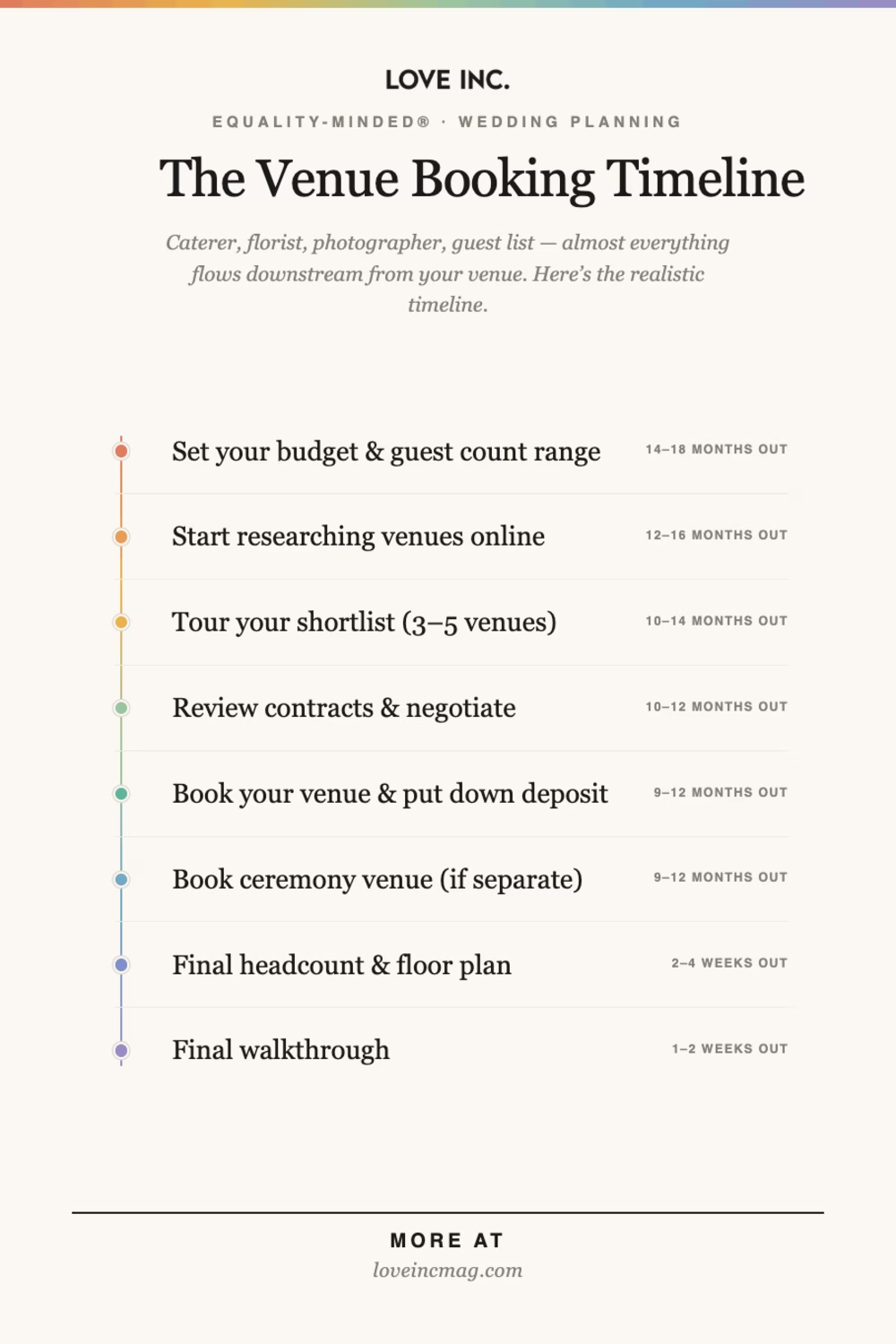
Almost everything else in wedding planning — caterer, florist, photographer, guest list — flows downstream from your venue. Here’s the realistic timeline:
| Stage | When |
| Set your budget & guest count range | 14–18 months before |
| Start researching venues online | 12–16 months before |
| Tour your shortlist (3–5 venues) | 10–14 months before |
| Review contracts & negotiate | 10–12 months before |
| Book your venue & put down deposit | 9–12 months before |
| Book ceremony venue (if separate) | 9–12 months before |
| Final headcount & floor plan | 2–4 weeks before |
| Final walkthrough | 1–2 weeks before |
Heads up: in-demand venues in major markets (NYC, LA, Chicago, most destination hot spots) regularly book 18 to 24 months out for peak-season Saturdays. If you’ve got your heart set on a specific place or a specific date, start earlier than you think you need to.
Every Type of Wedding Venue
Wedding venues fall into more categories than people realize. Some are full-service (catering, bar, rentals all included); others are beautiful empty rooms you build from scratch. Here is the traditional cast of characters:
- Polished & Full-Service: Ballroom, Country Club, Event Venue, Hotel, Resort, Restaurant
- Historical & Grand: Castle, Estate, Historical Venue
- Outdoor & Nature: Beach, Desert, Farm, Forest, Garden, Greenhouse, Mountain, Park, Ranch, Vineyard, Winery, Zoo/Botanical Garden
- Rustic & Retreat-Style: Barn, Cabin, Inn, Lodge
- Urban: Industrial/Warehouse, Loft, Brewery, Rooftop
- On the Water: Boat, Marina/Yacht Club
- Arts, Culture & Learning: Academic Venue, Art Gallery, Library, Museum, Theater
- Personal & Ceremonial: Backyard, Church/Chapel, City Hall, Private Residence
Each type comes with its own pros, price point, and logistical quirks. We break down all of them in our full guide to every type of wedding venue, explained.
Wanting something more unexpected? Aquariums, planetariums, bookstores, ferries — see our case for nontraditional wedding venues.
All-Inclusive vs. À La Carte Venues
This is the question that trips couples up most: what’s actually included?
All-inclusive venue: Bundles the space with catering, bar, tables, chairs, linens, and sometimes coordination and rentals. Higher upfront price tag, but it usually nets out cheaper (and significantly less stressful) than piecing it together yourself. There are still surprise fees though (cake-cutting fees, corkage fees, setup charges, etc.) so it’s really important to get everything spelled out in the contract.
À la carte venue: You’re renting the space only. You bring (and budget for) every other vendor: catering, bar, rentals, lighting, sometimes even the bathrooms. Lower site fee, higher total cost, and a much longer to-do list.
Hybrid venue: Many venues sit in between (rental + house tables and chairs + a preferred-vendor list). The most common setup, and the most important to read carefully.
Before you fall for a venue’s listed price, ask exactly what’s included. A $15,000 “all-inclusive” can be a steal; a $5,000 “venue only” can balloon to $40K once you add everything else. We recommend having a budget in mind before starting your tours so you know how much you’re working with.
What Wedding Venues Actually Cost
Wedding venue costs vary wildly by region, season, and what’s included, but here’s the realistic landscape:
| Tier | Typical Range | What You’re Getting |
| Budget | Under $3,000 | Parks, community halls, courthouses, intimate restaurants |
| Mid-Range | $3,000 – $10,000 | Restaurants, B&Bs, smaller event spaces, off-season venues |
| Premium | $10,000 – $25,000 | Hotels, country clubs, vineyards, popular event venues |
| Luxury | $25,000+ | Estates, destination resorts, premium hotels, exclusive private venues |
The national average wedding venue cost lands around $11,000–$13,000, but this is one of the most regionally variable line items in your entire wedding. A barn in upstate New York and a barn in central Texas can have a $20,000 gap.
The Variables That Move the Price
- Day of week. Saturday is the most expensive. Friday and Sunday are typically 20–30% off. Weekdays can save you 40–50%.
- Time of year. Peak season (May–October in most of the U.S.) is the priciest. October is the most popular wedding month in the country, which is also why it’s the most expensive. However, regions with more extreme weather (hello, Florida) have different peak seasons. For a more region-specific breakdown, head to our post on When Is Wedding Season Based On Your Region.
- Time of day. Daytime weddings (brunch, lunch) often cost less than evening receptions.
- Guest count. Per-person pricing is the norm at full-service venues. Smaller weddings = lower total.
- Food & beverage minimums. Many venues have a minimum F&B spend; the “venue fee” is just the deposit on that.
- Region. Urban hubs and destination markets run 50–100% higher than suburban or rural areas.
Picking Your Wedding Date
Your wedding date and your wedding venue are decided together. Available dates at your favorite venue might not match your dream timeline, and your dream timeline might price you out of your favorite venue. There’s no right answer on which is more important — date or space — it’s whatever you and your partner prioritize.
Wedding season also looks different depending on where you live. October is the most popular wedding month nationally, but the actual sweet spots vary by climate: the Northeast and Midwest peak May–October (avoiding the July–August heat), the Southeast stretches March–November (skipping hurricane season), the Northwest is best July–September, and the West is essentially year-round.
We mapped the whole country and broke down which months will save you money where in our guide to wedding season by region.
Holiday & Off-Season Weddings
Holiday weekend weddings have their charms: built-in decor, three-day weekends for travel, and a festive mood. They also come with logistical landmines such as higher flight costs, family obligations, and the risk of accidentally excluding guests whose holidays you didn’t think about.
Big one to internalize: winter is not the same as Christmas. December alone covers Christmas, Hanukkah, Yule, Kwanzaa, and a handful of other faith and cultural celebrations. If you’re considering any holiday-adjacent date (December, Thanksgiving weekend, Easter, Passover, the Fourth of July, the High Holy Days), don’t miss our piece on being inclusive with your holiday wedding before you lock anything in. Inclusivity around faith, family, and travel matters more on these dates, not less.
Going the other direction — getting married in January, February, or early March in most regions — can save you 30 to 50 percent on your venue, with the trade-off being weather risk and a slightly smaller guest list (some people just don’t travel in winter). If you go this route, plan for the worst-case weather.
Questions to Ask Before You Book
Not asking the right questions before signing and/or not thoroughly reading the contract can create big problems down the road. A pretty venue can become a logistical and financial nightmare once you’re 60 days out and discovering the cake-cutting fee, the corkage fee, the early-arrival fee, and the “after-midnight” fee.
Start with the obvious:
- What’s included in the rental fee and what isn’t?
- Is there a food and beverage minimum? Service charges? Gratuity?
- What are the overtime, cake-cutting, corkage, and cleanup fees?
- Is the venue exclusive on your date, or are other events happening?
- What’s the backup plan for outdoor ceremonies?
- What’s the cancellation and rescheduling policy?
But the questions that actually surface hidden costs and red flags are the ones couples never think to ask:
- Will any part of the property be undergoing renovations on our wedding day? Where, and how loud?
- Can we bring our own alcohol? (Most venues say no, but the savings if they say yes are wild.) Psst … check out this podcast episode for even more venue budget-saving tips!
- Can you put together a full cost estimate with everything required? (This is how you unearth required security, valet, and other fine-print fees.)
- What kind of security do you provide in the getting-ready rooms?
- Where are the nearest accommodations, and what’s transportation like for guests?
We pulled these (and a dozen more) directly from wedding planners and venue managers in our full questions to ask your wedding venue before booking, and give our podcast episode on deciphering contracts a listen to equip you with the information as you navigate those contract details.
What to Look for on the Tour
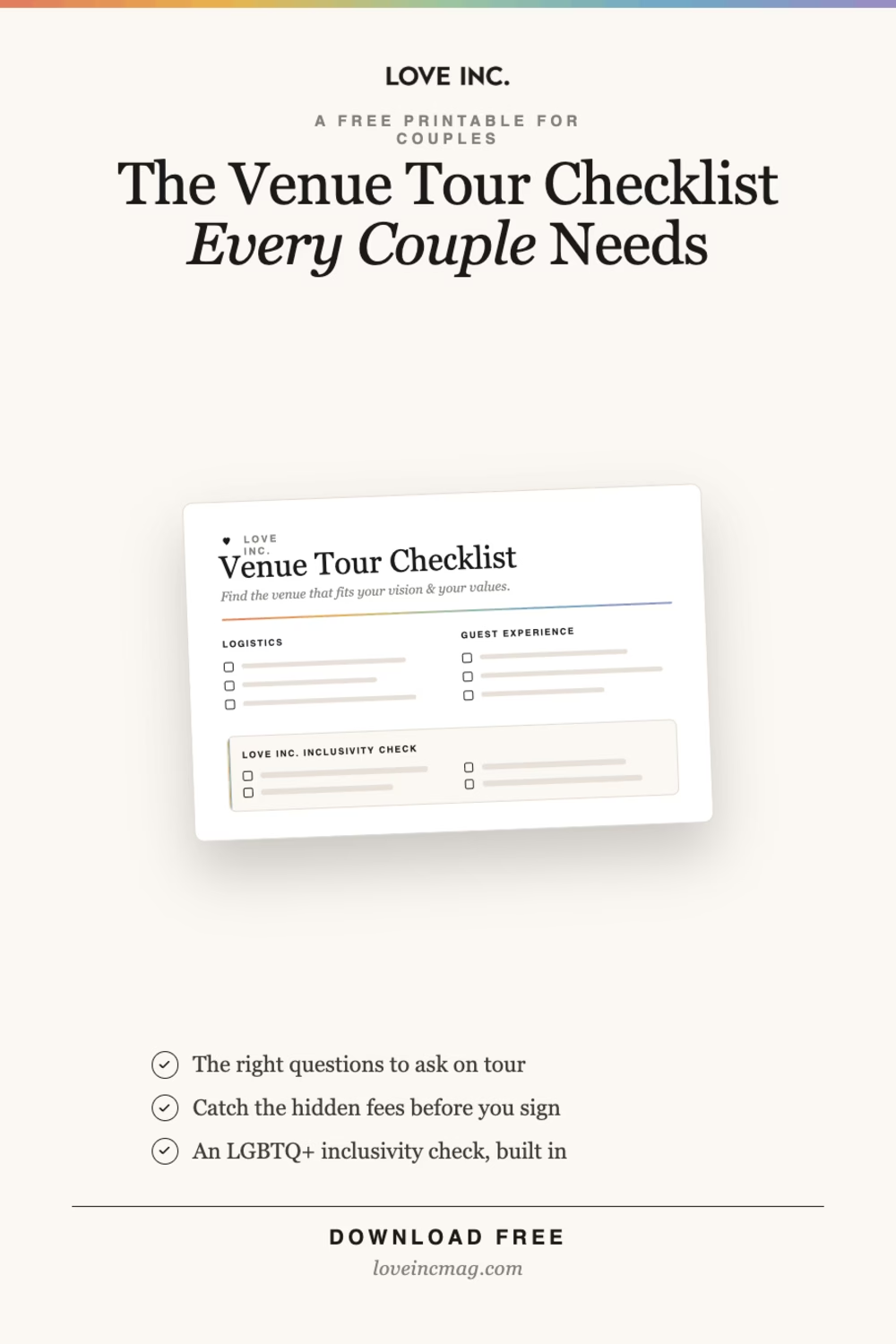
On the walkthrough itself, bring this checklist with you to every venue, which we made into an easy (and free!) downloadable file:
- Your max guest count and approximate budget (state both upfront).
- A printed list of must-ask questions (above).
- Your phone for photos and video of every space including bathrooms, parking lots, and the getting-ready suites.
- A tape measure for tight spots (dance floor, head table area, ceremony aisle).
- Your partner, plus one trusted second opinion if you can swing it.
And look for the small stuff that signals how the venue is actually run:
- Is there trash on the property? Anywhere?
- How is the staff treating you, your partner, and each other?
- Where are the electrical outlets and water hookups? (Your DJ and caterer will thank you.)
- Are there gender-neutral restrooms or at least the willingness to add temporary signage?
- Are the getting-ready rooms equally sized and equally outfitted? (You know we dive more in on that — see the next section.)
Editor’s Tip: Tour at the same time of day your wedding will actually take place. A garden venue looks magical at golden hour and very different at 11 a.m. with no shade. And ask to see the venue with another wedding set up if possible … you’ll get a much more realistic preview than the empty-room tour.
Making Sure Your Venue Is Truly LGBTQ+ Inclusive
This is the part of venue-shopping that gets glossed over in most wedding guides and the part that matters most to our community. A venue saying “of course we welcome everyone!” is not the same as a venue that has actually thought about what inclusive hospitality looks like.
The signals worth looking for:
- LGBTQ+ couples in their photo gallery: not just one token rainbow image on the homepage — we want to see real weddings on their website portfolio and Instagram.
- Inclusive language in their materials: gender-neutral contracts, no “bride and groom” fields with no third option.
- Staff who don’t make assumptions: did the tour guide call you sisters? Friends? Did they ask which one of you is the bride? Notice it.
- Equally sized getting-ready rooms: too many venues have a giant “bridal suite” and a closet-sized “groom’s room.” For same-sex couples, that’s a hard pass.
- Gender-neutral restrooms (or the willingness to add all-gender signage for your event).
- LGBTQ+-inclusive preferred vendors: if a venue can’t recommend a single inclusive caterer or florist, that’s telling. But bonus if they require all vendors they recommend to be inclusive.
- Vetted listings on The Love List: every venue in our directory has been editorially confirmed as EQUALITY-MINDED®.
Our full framework — including 7 sneaky ways to confirm a vendor is actually LGBTQ+ friendly — lives in how to make sure your wedding venue is truly inclusive. The short version: trust your gut. If something feels off on the tour, it’ll feel worse on the day.
Why You Should Consider a Nontraditional Venue
Some of the most beautiful, memorable, you-est weddings we’ve ever covered happened in venues nobody else thought to book. Nontraditional venues come with logistical lifts (more à la carte, more permits, sometimes no on-site kitchen), but they also come with personality you can’t manufacture. They tend to cost less than traditional event venues, photograph beautifully, and feel unmistakably like you.
Read our full case (and a dozen unexpected venue types we love) in why you should consider a nontraditional wedding venue.
What to Do If Your Venue Cancels
It happens more than anyone wants to admit — venues close, change ownership (and new owners are anti-gay), accidentally double-book, or get hit by something nobody planned for. Vendors cancel, too. If yours does:
- Review your contract first. The cancellation clause is what matters; everything else is a distraction.
- Take a pause before rebooking. Sometimes a cancellation is a gift in disguise and a chance to recenter on what you actually wanted.
- Lean on your other vendors. Wedding planners, photographers, and caterers have networks. They’re often your fastest lead on a replacement.
- Restart your search with the venues you almost booked. They’re already vetted. Check their availability first.
- Be flexible. Adjacent dates, slightly different vibes — Plan B can absolutely become the wedding of your dreams.
Wedding insurance is also worth exploring — usually $150 to $500 for the day, with coverage that includes vendor and venue cancellation.
Full crisis-mode playbook (with real planner advice and contract red flags) in our blog post: your wedding venue or vendor canceled? Here’s your six-step plan.
How to Save Money on Your Venue
Smart swaps that don’t water down the vibe:
- Book a Friday, Sunday, or weekday. Easiest 20–40% you’ll ever save.
- Go off-season. January through March in most of the U.S. drops venue prices dramatically.
- Choose a daytime ceremony and reception. Brunch weddings are having a moment for a reason.
- Combine your ceremony and reception venues. You save on rentals, transportation, and time.
- Skip the obvious destinations. One county over from the trending venue area is often half the price for the same look.
- Consider a nontraditional venue. Restaurants, museums, and breweries often run far below “event venue” pricing.
- Cut your guest list. Smaller guest count = smaller venue + lower per-person costs. The single most impactful budget lever.
- Negotiate. Site fees, minimums, and add-ons are often more flexible than you think, especially in shoulder seasons.
Find Your Venue on The Love List
Once you know what you’re looking for, the next step is finding the right venue. One that you can feel confident reaching out to knowing that they’ll celebrate your love.
The Love List is our editorially vetted directory of EQUALITY-MINDED® wedding venues. Every venue on the list has been reviewed by our editors and confirmed to be a safe, celebratory home for LGBTQ+ couples. No box-checking, no “we don’t discriminate” disclaimers. Just venues that genuinely show up.
Browse Wedding Venues on The Love List →
You can also browse our real weddings and inspiration shoots for ideas and inspiration. Browse by location, setting and style … and yep, all of those have been vetted and verified for their equality-mindedness as well!
Editor’s Tip: Book your venue earlier than you think. The best inclusive wedding venues — especially the small, independent ones — get snapped up 12 to 18 months in advance for peak-season Saturdays. If you’re flexible on date, you’ll have more options. If you’re not, start the search now.
How much does a wedding venue cost?
Wedding venue costs range from under $3,000 for budget-friendly options like parks, community halls, and intimate restaurants, to $25,000 or more for luxury estates and destination resorts. The national average lands around $11,000 to $13,000, but pricing is highly regional, and what’s included in the fee (catering, bar, rentals) dramatically changes total cost.
When should I book my wedding venue?
Book your wedding venue 9 to 14 months before your wedding date for most venues, and 18 to 24 months out for in-demand venues in major markets or for peak-season Saturdays. Off-season and weekday weddings often have more flexibility and can sometimes book 6 to 9 months out.
What’s the difference between an all-inclusive and à la carte wedding venue?
An all-inclusive wedding venue bundles the space with catering, bar, tables, chairs, linens, and sometimes coordination — one contract, one bill. An à la carte venue is a rental-only space; you bring every other vendor and rental. All-inclusive often nets out cheaper and easier; à la carte gives you more creative control.
How do I know if a wedding venue is LGBTQ+ inclusive?
Look for explicit LGBTQ+ couples in the venue’s photo galleries, gender-neutral contract language, staff who don’t make assumptions about your roles or pronouns, equally-sized getting-ready rooms, and inclusive restroom signage. A listing on a vetted directory like Love Inc.’s The Love List is the most reliable signal of all.
What’s the best month to get married?
October is the most popular wedding month in the United States, when weather is mild and fall foliage is at peak. The most affordable months for weddings are January, February, and early March, when venues often offer 30–50% off their peak rates. Wedding season also varies by region … the Northwest’s sweet spot is July through September, while California is essentially year-round.
Can I have a wedding outside of a traditional venue?
Yes — and many couples do. Nontraditional wedding venues like aquariums, museums, rooftops, planetariums, bookstores, breweries, restaurants, private homes, and unique outdoor locations often cost less than traditional event venues and bring a personality you can’t manufacture. They do require more à la carte vendor coordination and sometimes additional permits.
What happens if my wedding venue cancels?
If your wedding venue cancels, review your contract immediately, take a beat to recenter on what you actually wanted, then lean on your other vendors for replacement recommendations. Restart your search with the venues you almost booked the first time, they’re already vetted. Wedding insurance (typically $150 to $500 for the day) covers most cancellation scenarios.
How many wedding venues should I tour before booking?
Most couples tour three to five wedding venues before booking. More than that and decision fatigue sets in; fewer and you may not have enough comparison points. Do your online research first, then tour your shortlist in person.
What questions should I ask a wedding venue before signing?
Beyond the obvious — what’s included, what the food and beverage minimum is, what the cancellation policy says — ask the lesser-known ones: Will any part of the property be under construction? Can we bring our own alcohol? Can you provide a complete cost estimate with every required line item? What’s the security like in the getting-ready rooms? These are the questions that surface hidden fees and red flags.
Do I need wedding insurance for my venue?
Many venues require couples to carry event liability insurance, typically $1 to $2 million in coverage, which costs $150 to $500 for a one-day policy. Even if your venue doesn’t require it, wedding insurance can protect you against vendor cancellation, weather emergencies, and venue closure. After the last few years, we recommend it across the board.Ready to start your venue search? This wedding venue guide pairs well with our deep-dives on every type of wedding venue, nontraditional venues your guests will remember, and the full Love List directory of inclusive wedding venues.