



Weddings are wasteful, but eco-conscious decisions can help reduce your carbon footprint.
According to studies, the average wedding produces approximately 400 pounds of garbage. With an estimated 2.5 million weddings happening in the U.S. each year, that adds up to more than 1 billion pounds of wedding trash per year. That's about 2.5 Empire State Buildings made of leftover food, floral waste and plastics.
Luckily, a little extra thoughtfulness can help create lasting wedding memories without leaving a lasting impact on the planet.
For Ashley Przedwiecki, creative director and founder of the LUUM Collective, a sustainable event design agency in Minnesota, that means changing our idea of what we think a wedding should look like. To reduce the traditional amount of wedding waste, she says we can start with bucking wedding traditions.
“Save-the-dates, the garter toss, large guest lists, photo booths, cake-cutting, wedding favors … there are so many traditions and things you feel you're supposed to do,” she says. “This is your time to celebrate your love and there shouldn't be all this pressure to spend unnecessary money on stuff that you will only use one time and then toss.”
Another traditional aspect of weddings we can challenge is the belief that more is better. A Gatsby-esque celebration with bottomless amounts of food and drink may look extravagant but it's not the mark of a beautiful wedding. As Henry Rich, managing partner of Purslane, a zero-waste catering company in New York City, notes, “The idea of excess being equated with quality and luxury is on its way out.”
SOMETHING OLD, SOMETHING BORROWED
But not all wedding traditions are unsustainable. When it comes to implementing planet-friendly wedding fashion and decor, the “something old” and “something borrowed” traditions are a great place to start.
Aja Barber, a stylist and author of Consumed: The Need for Collective Change: Colonialism, Climate Change and Consumerism, suggests encouraging members of your wedding party and wedding guests to rent their outfits. “There's no point in sinking hundreds of dollars into a dress you'll only wear a couple of times,” she says. You can do this by including a small note on your wedding website with links to fashion rental services.
While it's quick and easy to go on Etsy or Amazon and order brand-new vases, candle holders, signage, etc., these products often come packaged in plastic and will likely be thrown out at the end of the night. To prevent this unnecessary waste, look for rentals and tap into your social networks to find recently married couples who are looking to resell their wedding decor.
“I know everyone wants everything to look shiny and new,” says Kendra Thalman, Purslane's sales and event director. “But you can make your wedding uniquely yours by finding things to borrow and buy in Facebook wedding groups.”
And once your special day is over, pass on the joy to another couple who can give your wedding decor new life at their own wedding.
IF NOTHING ELSE, COMPOST
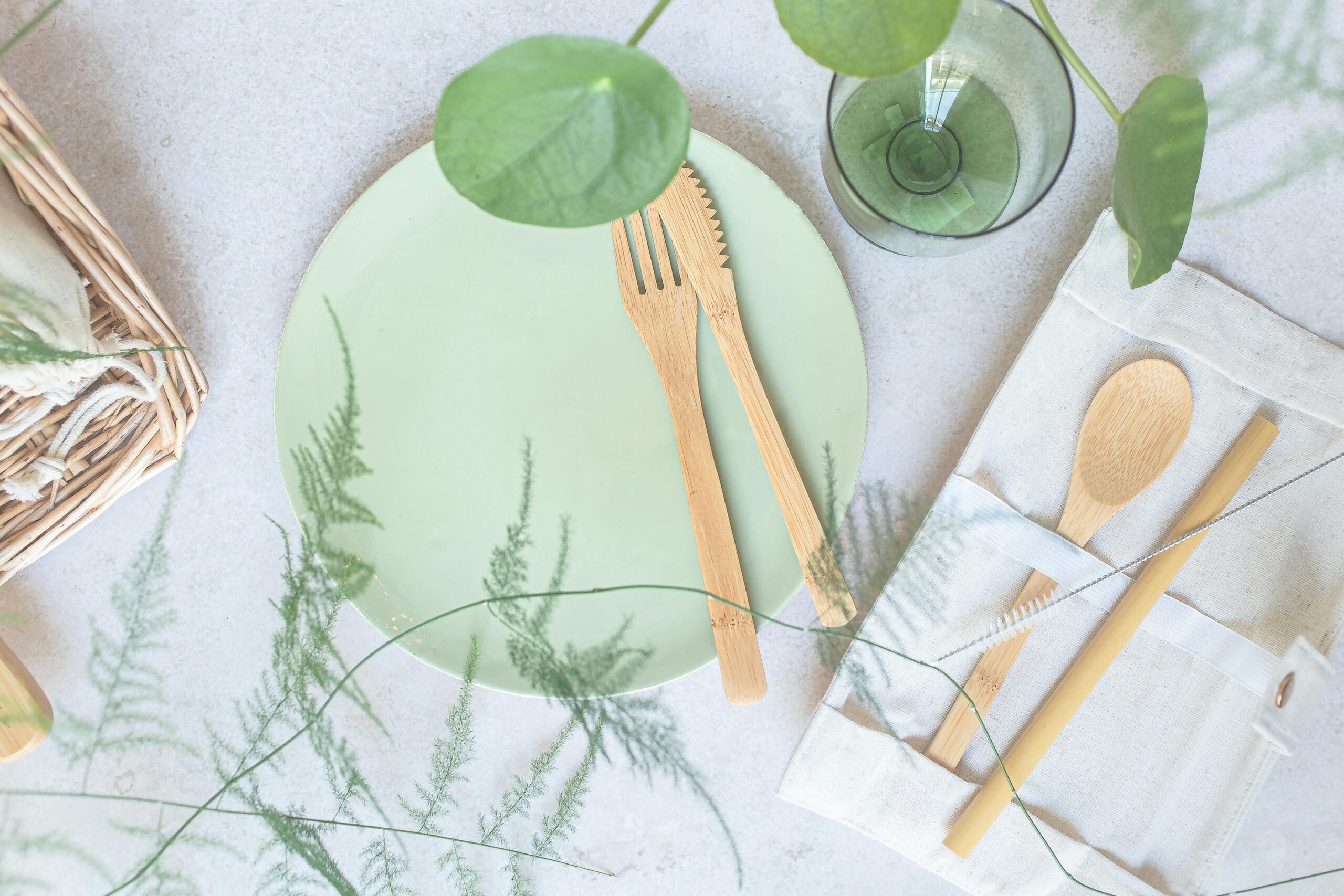
When Purslane caters for a wedding, there are no plastic utensils to be found. Leftovers will be composted or donated if possible, and all decor is either upcycled or recycled. In addition to being a zero-waste company, Purslane is also carbon-neutral, meaning they not only work to reduce the carbon footprint of each wedding, but also invest in carbon sequestratian projects.
Of course, not everyone will have the chance to work with a caterer like Purslane, but with the mindful curation of vendors and supplies, any couple can plan a low-waste wedding.
According to Thalman, the single most important thing couples can do at their wedding is compost. After all, the leftover food will be the most significant contributor to greenhouse gas emissions. And yes, you can hire a dedicated service to help. “Composting is really simple as opposed to, you know, drastically changing what you're ordering for your wedding,” she says.
Composting is necessary for floral arrangements, too. Even though flowers are biodegradable, trash piles are so compact that trashed flowers lack the oxygen needed to break down the way they would when composted. This means the flowers will break down anaerobically instead, producing methane.
Barber also wants to remind couples that when it comes to florals, local and in-season are best. After all, 80% of flowers sold in the United States are imported, according to the USDA. The resources needed to grow and transport those faraway flowers are a huge contributor to a wedding's environmental impact.
Even if you changed nothing else about your wedding, composting alone would have a significant impact. According to Przedwiecki, if every wedding diverted food and floral waste from the landfill, we could offset 3.8 pounds of greenhouse gas emissions for every pound of that waste.

So keep calm and compost on.
QUICK TIPS
Wedding planning is already quite overwhelming, and planning an eco-conscious day requires some extra effort. To help, here are Przedwiecki's quick tips for a sustainable event:
- Add more vegetarian, plant-forward dishes to your menu, or eliminate red meat to start.
- Highlight foods that are in-season and work with caterers who source from local farms and small businesses.
- Reduce plate size.
- Have a plan for leftover food by packing it up and bringing it home, or partnering with local food rescue organizations for donation. Provide takeaway containers for your guests to take home.
- Consider your guests' travel journey. Suggest carpooling when possible.
Written by Kristen Pizzo | Photography by Micheile Henderson
*This article was originally featured in Love Inc. V9 print issue. Buy your copy here.**
Related