
LGBTQ+ couples often face a “second coming out” during wedding planning, navigating repeated disclosures with vendors and seeking inclusive professionals who reduce emotional labor.
Planning a wedding is supposed to be about celebrating your love story … not repeatedly explaining it. And yet, for many LGBTQ+ couples, that’s exactly what it becomes. Because long after the “big” coming out moments to family, to friends, to the world (which, in a perfect world, wouldn’t even have to happen because we should have always been able to live our authentic selves, but I digress), there’s a quieter, more exhausting version that shows up during wedding planning: coming out again. And again. And again.
To your photographer.
To your venue.
To your florist.
To your officiant.
To every single vendor you inquire with.
Welcome to what we have deemed as the second coming out.
It Starts With a Simple Inquiry and a Loaded Pause
It often begins with something small: a contact form. And at first, it doesn’t seem like a big deal.
You’re filling out a contact form. Typing in your names. Maybe you pause for a second longer than you expected to to try and figure out how to navigate the gendered form. Do you write both names? Do you default to first initials? You play Paper Rock Scissors to see who’s going to be listed as the groom this time.
Or maybe it’s an email: short, friendly, going through your checklist of initial inquiry questions. But even then, there’s a layer beneath it, an awareness that this isn’t just an inquiry. It’s a reveal. Because until they know who you are, you can’t be sure how they’ll respond. And it can be awkward at best.
The Emotional Labor No One Talks About
Straight couples don’t have to think about any of this. They don’t wonder if a vendor will be comfortable working with them. They don’t scan websites for subtle cues or coded language, emojis that deem that this is a safe space. They don’t brace themselves for questions that flatten their relationship into something easier for someone else to understand.
But it’s not just about avoiding outright discrimination. It’s the accumulation of smaller moments — the ones that don’t always seem worth calling out, but never quite sit right either.
The hesitation before correcting someone.
The decision to let something slide because you don’t have the energy.
The mental note that this might not be the right fit, even if everything else looks perfect on paper.
By the time you’ve reached out to a handful of vendors, you’re not just making decisions about your wedding — you’re managing your own capacity to keep showing up in these conversations. Frankly, it’s exhausting.
When “Inclusive” Doesn’t Quite Land
What makes it more complicated is that most vendors don’t see themselves as exclusionary. They’ll say they work with everyone, and they may truly mean it. They might even have a rainbow tucked somewhere on their website or social feed. On the surface, it feels like enough. But then you go on a venue tour and are shown the “bridal suite” or the cake designer misgenders you at the tasting, it can feel like those nods to inclusivity are just lip service. Heteronormativity is so engrained in the wedding industry that these professionals may not even realize they’re doing it. While at the same time, it shouldn’t fall on the couples to educate them.
A rainbow can signal openness, but it doesn’t guarantee experience. It doesn’t tell you how someone communicates in real time, how they handle a mistake, or whether they’ve done the deeper work of understanding LGBTQ+ couples beyond a marketing moment. And that gap is where a lot of the emotional labor lives.
Making It Easier: Reducing the Guesswork
There’s no perfect system for vetting inclusivity at scale because inclusivity isn’t a static trait, it’s an ongoing practice. But there is a meaningful difference between starting from zero and starting from a place where a vendor has already raised their hand and said: yes, I want to work with and support LGBTQ+ couples.
The vendors who are truly doing this work are the ones who listen when something doesn’t land. They don’t deflect or shut down, they don’t make excuses. They adjust and do better.
At Love Inc., every vendor and venue in our equality-minded® directory has been confirmed to celebrate love in all its forms and is actively excited to work with LGBTQ+ couples. And with over 5,000 vetted listings, it’s a great place to start. That doesn’t mean every interaction will be flawless but it does mean you’re not walking into a conversation wondering if you’ll be accepted at all.
And for many couples, that alone removes one of the heaviest layers of stress.
From there, it becomes less about proving your relationship belongs, and more about finding the vendors who align with you — who listen well, communicate thoughtfully, and are willing to grow. Behind the scenes, we’re continuously educating our vendors on how to better serve LGBTQ+ couples, from language and communication to the more nuanced, often overlooked parts of the wedding experience. The goal isn’t to expect perfection … it’s to raise the standard, collectively, and create a starting point that feels safer, more intentional and far less exhausting than doing it all on your own.
Because you’ve already done the work of being seen — your wedding should be a space where you’re simply met there.
Inclusive Wedding Vendors
Discover Love Inc. Mag’s Love List – a carefully curated selection of top wedding professionals who honor love in all its beautiful forms. Vetted by our expert team, these vendors are committed to making your wedding uniquely yours, with talent, inclusivity, and passion.

Attire & Accessories

Photography

Venues
Beauty & Grooming

Floral

Rentals

Cakes & Desserts

Wedding Planning
Entertainment

Stationery
Catering & Bar

Event Design & Styling

Videography

Officiants
Audio/Visual
Photo Booth

Transportation
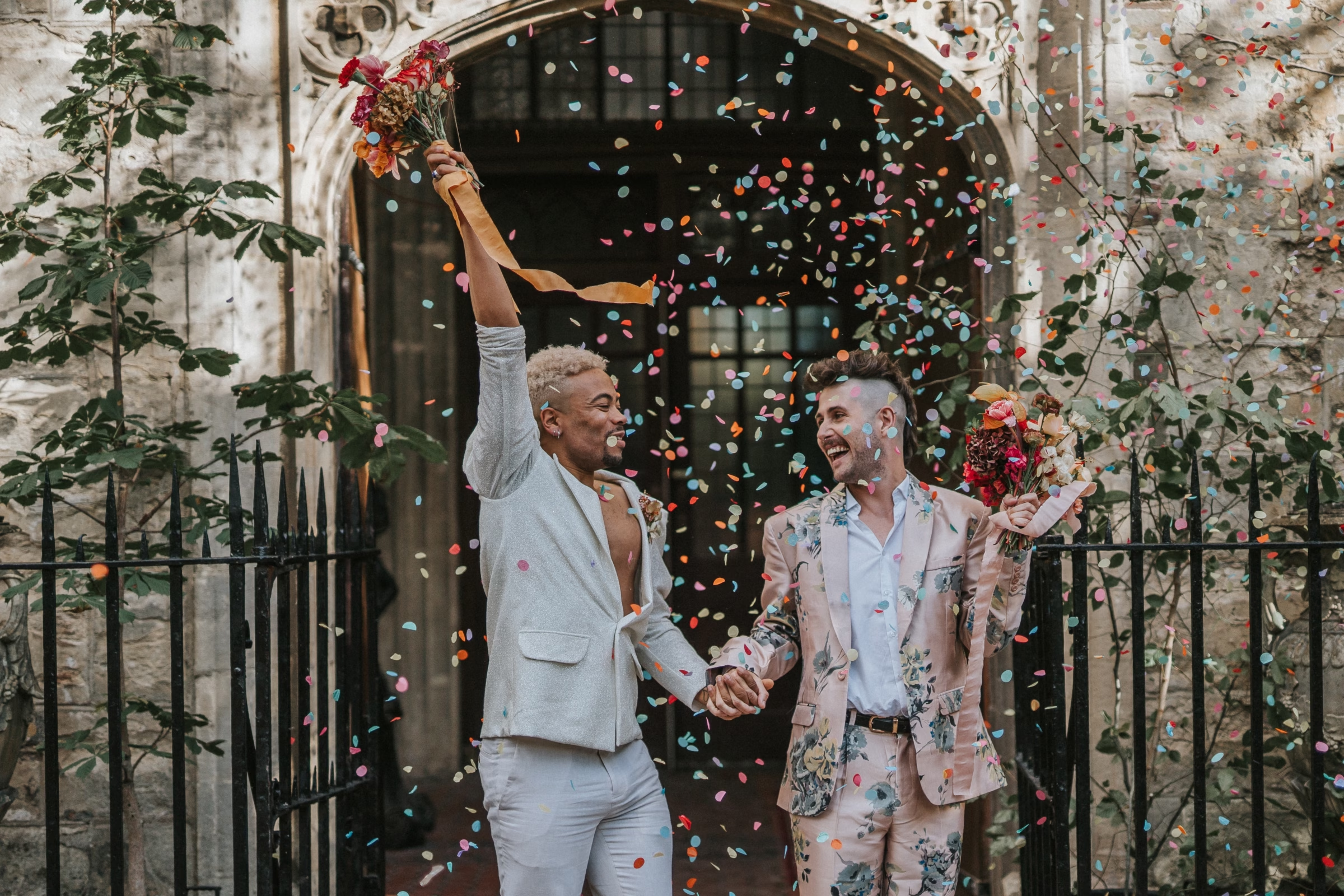
Cover photo by Stephanie Dreams Photography from Industrial Wedding Inspo with Disco Balls