




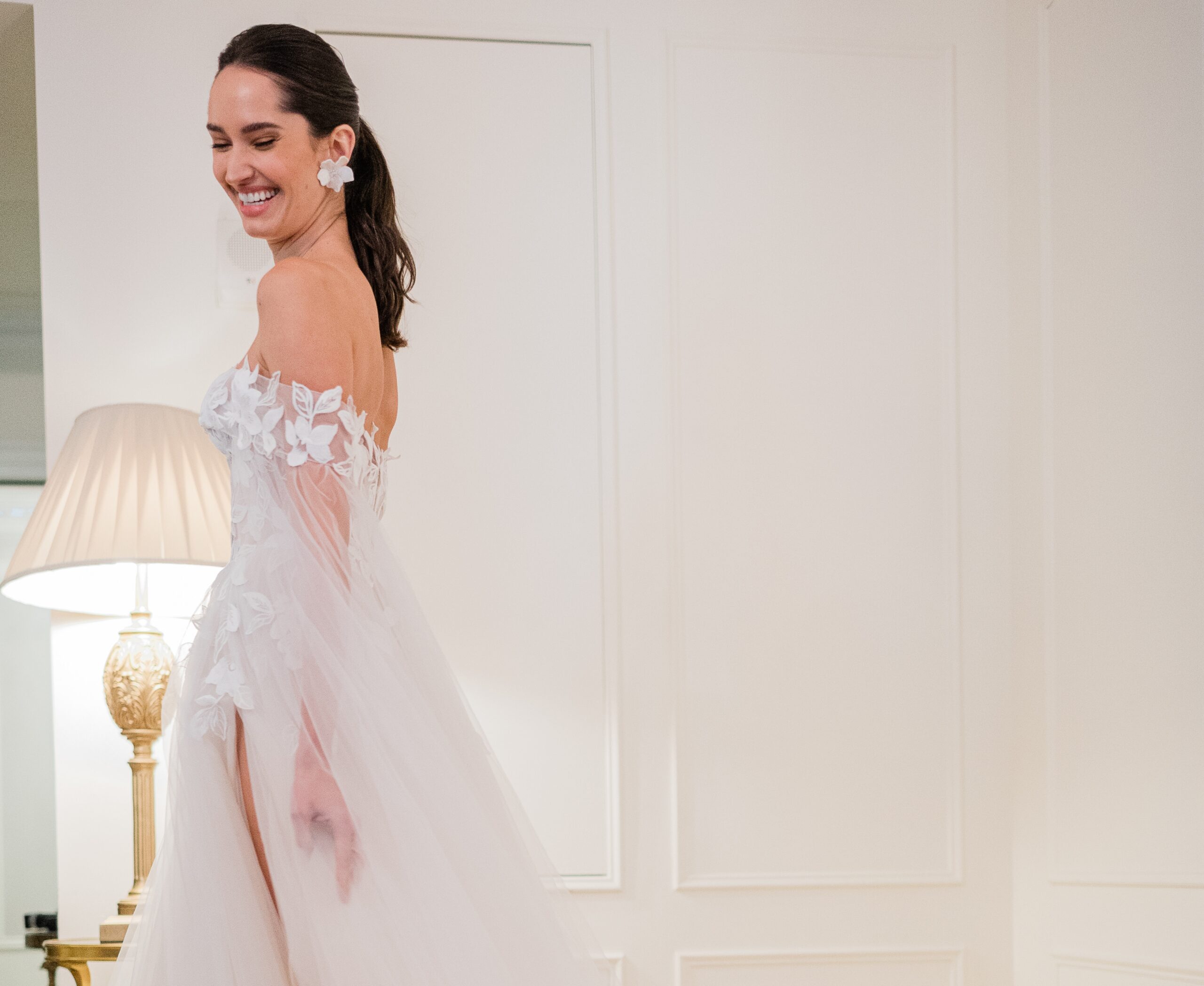


Is wedding dress shopping moving online?
From the comfort of our homes and on our own time, we can already browse and buy investment pieces, like a status symbol couch, a luxury car, or an original piece of art. So why not another significant and emotional purchase: a wedding dress?
Over the past few years, luxury bridal wardrobe stylist Maise-Kate Keane has clocked her clients becoming increasingly at ease shopping for a wedding dress online. After all, the Internet is open 24/7, while offering a range of style and price-point options and, oftentimes, more inclusive sizing. “It's definitely been a shift, but one that has made shopping more flexible and convenient for everyone,” says Keane.
Consumers have a rapidly growing number of alternatives to search, in addition to early entrants, like David's Bridal, which pioneered the bridal World Wide Web in 1999 and BHLDN (now known simply as Anthropologie Weddings) since 2011. Tech-enabled direct-to-consumer startups have been disrupting wedding retail with innovative customization concepts, including San Francisco's Grace & Liberty.
Launched in 2014, Los Angeles-based Azazie — recognized by Newsweek as one of “America's Fastest Growing Online Shops” in 2022 — continually innovates its accessibly priced wedding fashion offerings and services, including its popular swatch and Home Try On programs. “You can still get all of the dresses and try them on, but you're doing it at home,” says Azazie CMO Ranu Coleman. Customers invite friends and family over for private fitting parties and return what they don't want.
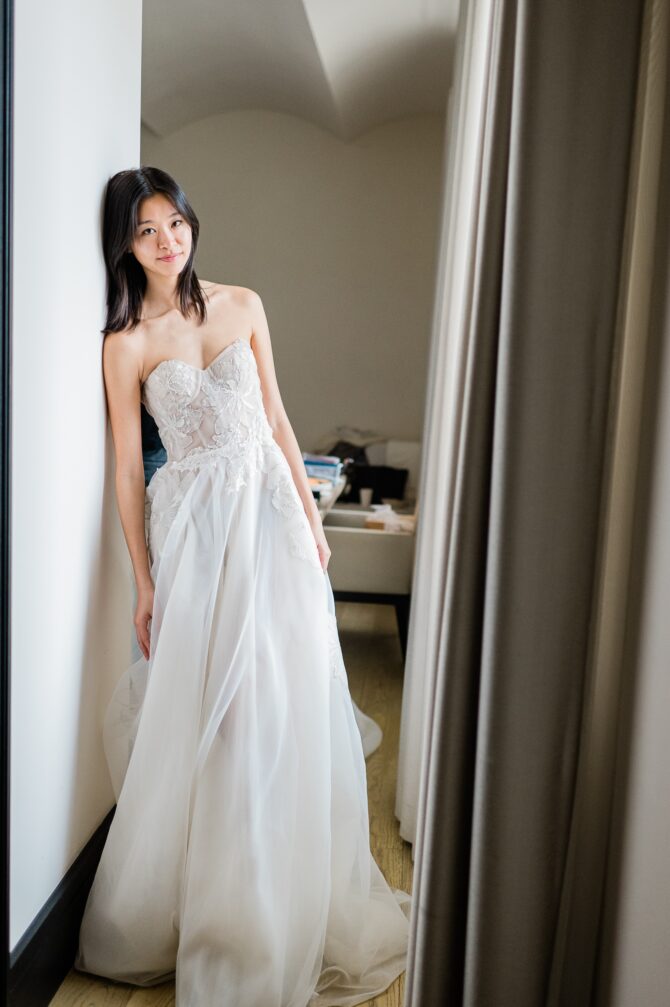
In just the last couple of years alone, contemporary fashion brands, including HVN, Loeffler Randall, Ba&sh and Staud, have debuted bridal collections, both in-store and online, as organic progressions of their brand, and often at the enthusiastic behest of their clientele. “It's the number one request I get via Instagram DM or email,” says New York City-based fashion designer Meruert Tolegen, who introduced the “bridal edit” of her sculptural wedding-appropriate ready-to-wear in Spring 2023. It's not just individual brands making wedding dress shopping more accessible at the touch of a trackpad. “We are seeing an uptick in consumers shopping for wedding dresses online, especially with many luxury multi-brand e-tailers including Mytheresa, Net-A-Porter, and Matches Fashion entering the bridal space with dedicated wedding edits,” says Laure Saunter, Senior Strategist at trend forecaster WGSN.
Luxury bridal houses are joining the online mix in creative ways to meet Millennials and Gen Z, whose consumer behavior was also affected by the global pandemic. At the height of the pared-down pandemic nuptials in 2021, Colombia-based Francesca Miranda launched The Gloria, offering the U.S. market apparel ideal for civil ceremonies and backyard weddings, and chic lifestyle items and accessories. Tel Aviv-based Galia Lahav debuted its ready-to-ship (and easy-to-return) Pret-A-Porter line in June 2020.
Putting a stake in the online market during unprecedented times also proved forward-thinking and fortuitous. The ensuing (and ongoing) 2022 Great Wedding Boom introduced the trend of multi-event celebrations, which continues the demand for non-traditional — and fashion-forward — wedding dresses. “It was very interesting for us to see a shift in the bride's mind,” says Danielle Jassir, Head of Brand Relations at Francesca Miranda.
NewYork City luxury fashion label Markarian introduced bridal in 2018 through e-commerce and retailers. These days, the founder and designer Alexandra O'Neill finds that most online bridal purchases are for additional looks, often from her couture clientele. They also tend to purchase wedding wardrobe items closer to the nuptial's date, so the immediacy of online just makes sense.
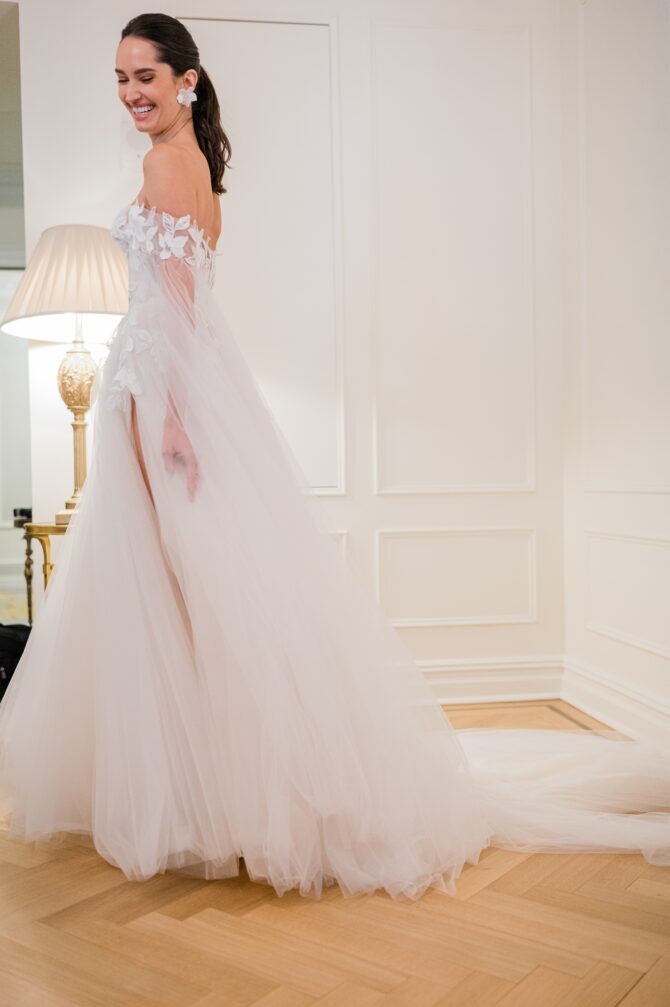
Also ahead of the game, Amsale rolled out a massive digital expansion in 2019, starting wtih the less formal Little White Dress and bridesmaids e-comm to later include Nouvelle Amsale. “To meet the customers where they are and provide as much convenience and support as we possibly could,” says CEO Neil Brown, who co-founded the New York City heritage label with his late wife and designer Amsale Aberra. Having Little White Dress e-commerce, and a much-utilized virtual try-on component, helped Amsale weather pandemic challenges and be well-positioned for how today's consumers are shopping their wedding wardrobe. The bulk of Little White Dress sales — 85% — are made online, compared to 15% in-store.
Soonlyweds also enjoy direct access to edgy, independent bridal fashion online. Thom Browne-alum Jackson Wiederhoeft launched their avant-garde, made-to-order DTC line in 2020, with e-commerce enabled from day one. Wiederhoeft's conceptually cool bridal offerings run from $950 brocade mini-tutu dresses to the magnificent corseted “Jackson” gown for a cool $15,900.
But the e-commerce objective isn't always about the actual purchase. “I wanted to demystify the situation,” says Wiederhoeft, pointing to traditional gatekeeping by retailers and brands to withhold pricing, even in-person. Each Wiederhoeft listing clearly states cost, materials and manufacturing origin, plus provides clear (and editorial-level) photos and video.
“We believe in transparency,” agrees Brown. While the Amsale signature collection is not available to buy online, the line's price points — like the $12,000 organza Meredith ballgown — are clearly displayed. So, discerning clients can visit the Madison Avenue flagship or a local retailer armed with crucial information. “We've always seen online as an opportunity to expand and enhance the experience of the customer,” says Brown, also emphasizing that “a physical connection is always going to be important.”
In-store shopping isn't going away, it's just evolving, ideally with synergistic online efforts that consistently maintain the brand's essence. “I believe that the future of wedding dress shopping will be a dynamic blend of e-commerce and brick-and-mortar experiences,” says Jon Morgan, CEO of business consulting firm Venture Smarter. “Both channels offer unique advantages to brands, retailers and consumers, and finding the right balance between them will be crucial for success.”

Rixo launched its much-anticipated, vintage-inspired bridal collection via e-commerce during a pandemic-y 2021. In May 2023, the London-based fashion brand unveiled a brick-and-mortar bridal boutique within the newly opened Chelsea flagship — a reverse move of sorts. Clients can now enjoy private in-person appointments to consult with a dedicated bridal specialist, peruse and try on looks and accessories and utilize in-house alterations.
Soonlyweds and their entourage may also partake in refreshments from a Rixo coffee kiosk, plus cocktails, beer and wine from chic The Smokey Kudu Bar. “We wanted it to be where people could immerse themselves into the brand — understand the brand DNA — and be able to stay and get a coffee,” says co-founder Henrietta Rix. She observes clientele first, honing choices online to fit in-store and vice-versa, to leave the boutique with a “creative package” of links to purchase from home later. But no pressure. It's about the experience.
“[E-commerce] is something that we'll obviously move into more, without letting go of that in-store experience,” says Jassir. “You must do both. It should be 50/50. It should be both growing, equally.”

5 EXPERT RULES FOR WEDDING DRESS SHOPPING ONLINE
New York City-based bridal wardrobe stylist Maisie-Kate Keane shares her expert tips.
- To focus your search, first compile a list of preferred fabrics, silhouettes, embellishments, and brands you love. Then create your own moodboard via Pinterest, Canva and/or Instagram.
- Find a tailor to get your exact measurements to compare to the size guides online. You'll probably need alterations too, so ask about their rates and timelines.
- Focus on brands/ateliers that provide copious photos to study (and zoom in on) all the angles, plus videos to understand movement. Examine social media content of real people, espeially with similar body shapes to yours, wearing the dresses.
- Meticulously analyze fabric and material details, size and fit descriptions, customer reviews (especially ones that allow photo/video uploads), and the return policy small print, especially for final sale.
- Take advantage of the customer service chat and virtual styling to ask all your questions. Keane even suggests sliding into the DMs of people who have worn the dress to ask about their experiences.
*This article was originally featured in Love Inc. V9 print issue. Buy your copy here.**
Written by Fawnia Soo Hoo | Photography by Kim-Trang Photography
Related





You must be logged in to post a comment.