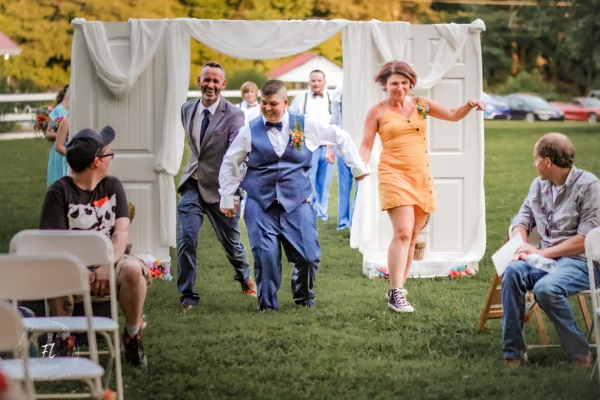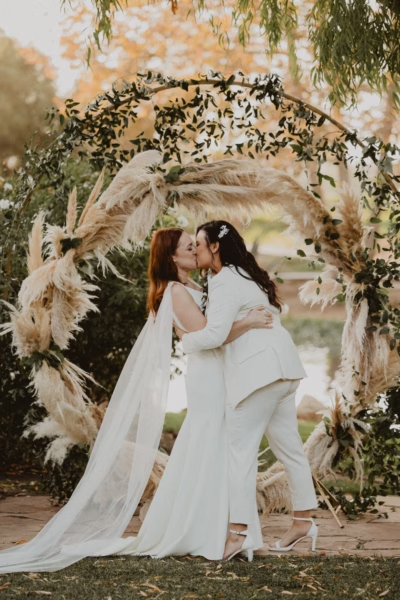

Custom suiting companies are breaking the binary, crafting impeccably tailored suits that exude sartorial sophistication for every gender.
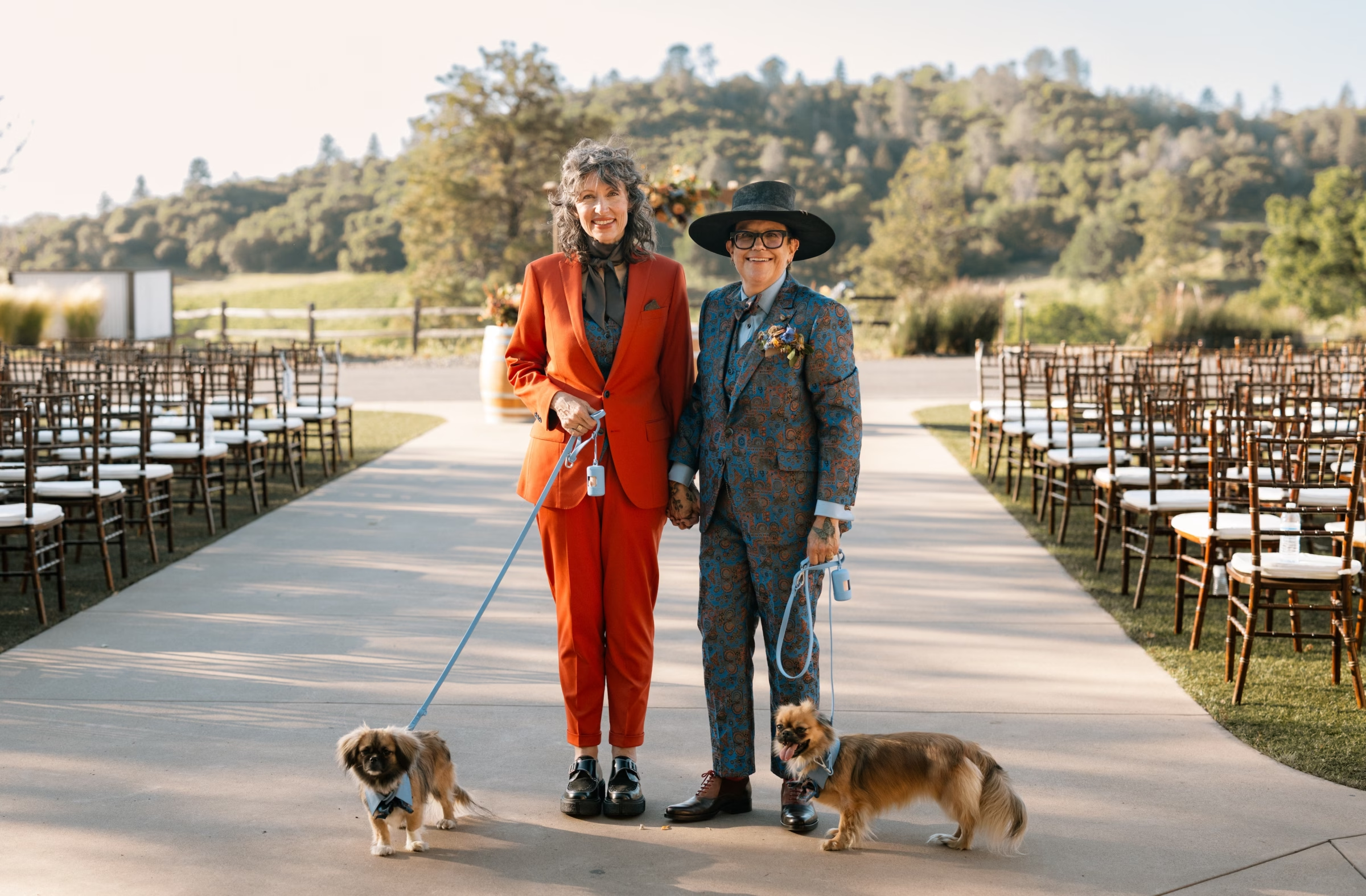
For their Sacramento wedding, Hez and Addy were determined to wear something memorable and personal: great-fitting suits that highlight their individual styles. Hez was looking for a femme-inspired ensemble to feel sexy and alive. Addy was in the market for a more confident and regal masc-inspired look.
Their search led them to Duchess Clothier, a boutique company in Portland, Ore., specializing in custom, inclusive designs for suits and tuxedos.
“We had no idea that we wanted and needed the expertise of Katie [Reynolds-Yang] at Duchess to hold our hands through the process,” recalls Hez. Neither had purchased a custom suit and knew it was essential to find a collaborator who truly understood their needs. “We felt catered to — like our desires and needs were heard, communication throughout the whole process was excellent, and we were at ease knowing that Duchess has a niche in queer clothing.”
In an industry already laden with gendered stereotypes, suits and tuxedos are particularly entrenched in outdated assumptions and designs. From the terminology to the cuts, and silhouettes available off the rack, finding the right suit can be daunting.
“It’s tough to talk about suiting in a way that’s not gendered because the infrastructure and how the jacket is made is very determinative of how it lays on your body and how it fits you,” says Emily Meyer, a California-based designer for her own label. “There are some things construction-wise that don’t work if there are parts of your body you do or don’t want to accentuate.”
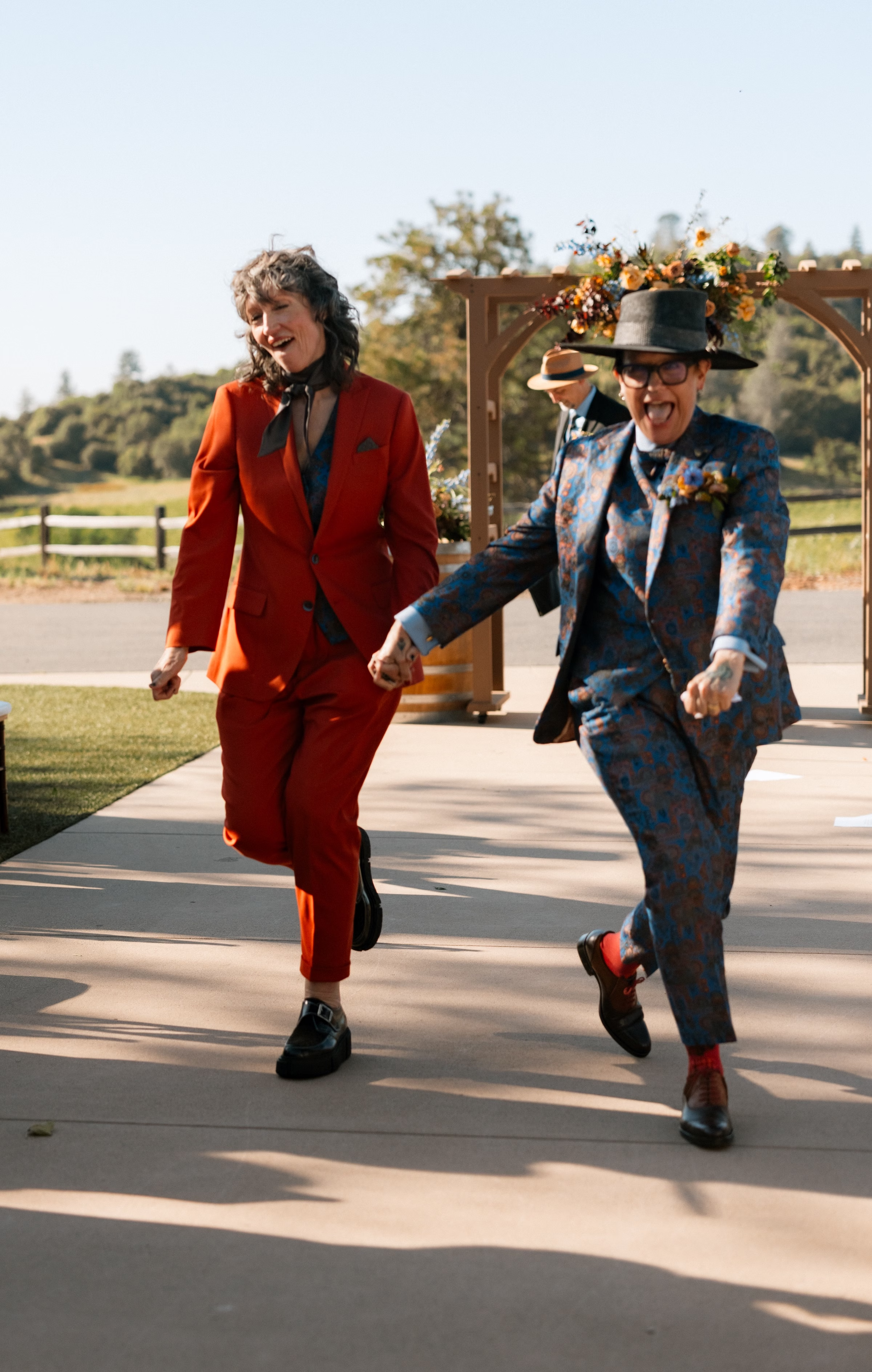
A new wave of designers is challenging these assumptions, creating garments that blend the careful construction that has made suits iconic for generations with modern techniques and styles that allow clients to present themselves in their own way.
“We totally understand how intimidating it can be to walk into a suit shop for the first time,” says Baili Watson, a consultant at Duchess Clothier. “It’s hard not to be intimidated when you walk into any other shop and are inundated with aggressively binary, homogenous, or pretentious marketing. A good tailor will understand their role as a listener and act as a liaison between you and the finished product.”
Professionals like Meyer and Watson want to know what their clients are drawn to and to understand their insecurities. They create garments based on individual identity, not gendered assumptions.
“Major retailers have this idea of how a suit should fit on someone who is assigned female at birth — nipped at the waist, accentuate the chest,” explains Watson. “I approach it with the assumption they want something that’s going to be fitted to their body while being mindful of their gender expression and how we can honor that through tailoring.”
The first consultation is an important step. It’s typically the longest meeting, lasting one to two hours, and is the best opportunity for the tailor and client to get to know each other.
Tips for Your First Consultation
- Bring pictures of suits and tuxedos you like — or those you absolutely don’t like.
- Bring shoes or undergarments, such as binders or bras, similar to those you’ll wear on your wedding day.
- Be honest about areas of your body that you’re not comfortable with.
- Have a clear budget.
- Bring a supportive friend or partner who will advocate for your vision.
- Ask detailed questions about timelines and expectations.
“I want to have a conversation with the client and get to know who they are holistically,” says Meyer. “Even what they wear to the first appointment can be very indicative of what they are comfortable with in terms of colors and fit. During that first meeting, I like to be on the same page about the silhouette of the suit and whether people are comfortable, or even want to, accentuate certain parts of their body in a way that traditional ‘womenswear’ would.”
Clients don’t need to have a concrete image of what they want or a deep understanding of nuanced terms and style choices. Hez and Addy, for example, developed a strong relationship with their designer, who helped walk them through the myriad of decisions. “[There were] so many choices and micro-decisions to make! For example, button colors and shapes, how many buttons, what color stitching around the buttonholes,” recalls Hez. “Katie at Duchess held our hand all the way through, offering style tips and practical suggestions. We also brought two friends with us so they could chime in on our selections.”
Identifying pictures of suits that catch your eye is an excellent shortcut to helping a designer understand your point of view. “Picture menus are popular for a reason,” Meyer says. “There’s a lot of ground to be covered with a client by showing them pictures or asking them to show me pictures of what they love and try their best to tell me what about that picture they like. It’s very helpful for someone who doesn’t have nuanced terms.”
Most ready-to-wear suits are designed with cis-presenting customers in mind, an anyone who doesn’t fit this mold needs to deal with gaps at the bust, ill-fitting shoulders, or lapels that don’t lay flat. A capable designer understands how to create a garment that fit comfortably, especially in the jacket, which is the iconic hallmark of a well-made suit.
“A common problem we see with jackets is the lapel. It can buckle across the apex if the fit isn’t quite right or if there’s too much internal construction and can really press into the shoulder,” says Watson. “If this is their first time wearing a suit, it’s better to have a little less construction because it’ll feel more normal and it’ll help with buckling at the bust.”
Another frequent complaint is uncomfortable pulling and gaping in the buttons of the shirt. “Shirts are honestly the trickiest garment to fit, even if you’re someone who typically wears off the rack,” warns Watson. “There’s the sleeve length; you don’t want the collar to be too snug. I often ask clients if they can dance without the shirt coming untucked.” In addition to paying careful attention to accurate measurements, Duchess designs often include additional buttons, as well as adjustments at the armpit to make sure there’s less space and awkward pull.
“Resist wearing what someone else thinks you should wear, what makes someone else feel comfortable, or trying to copy something someone else wore. Your wedding day is about you and the person you’re marrying. And they love you for who you already are, so let yourself shine through!“
— designer emily meyer
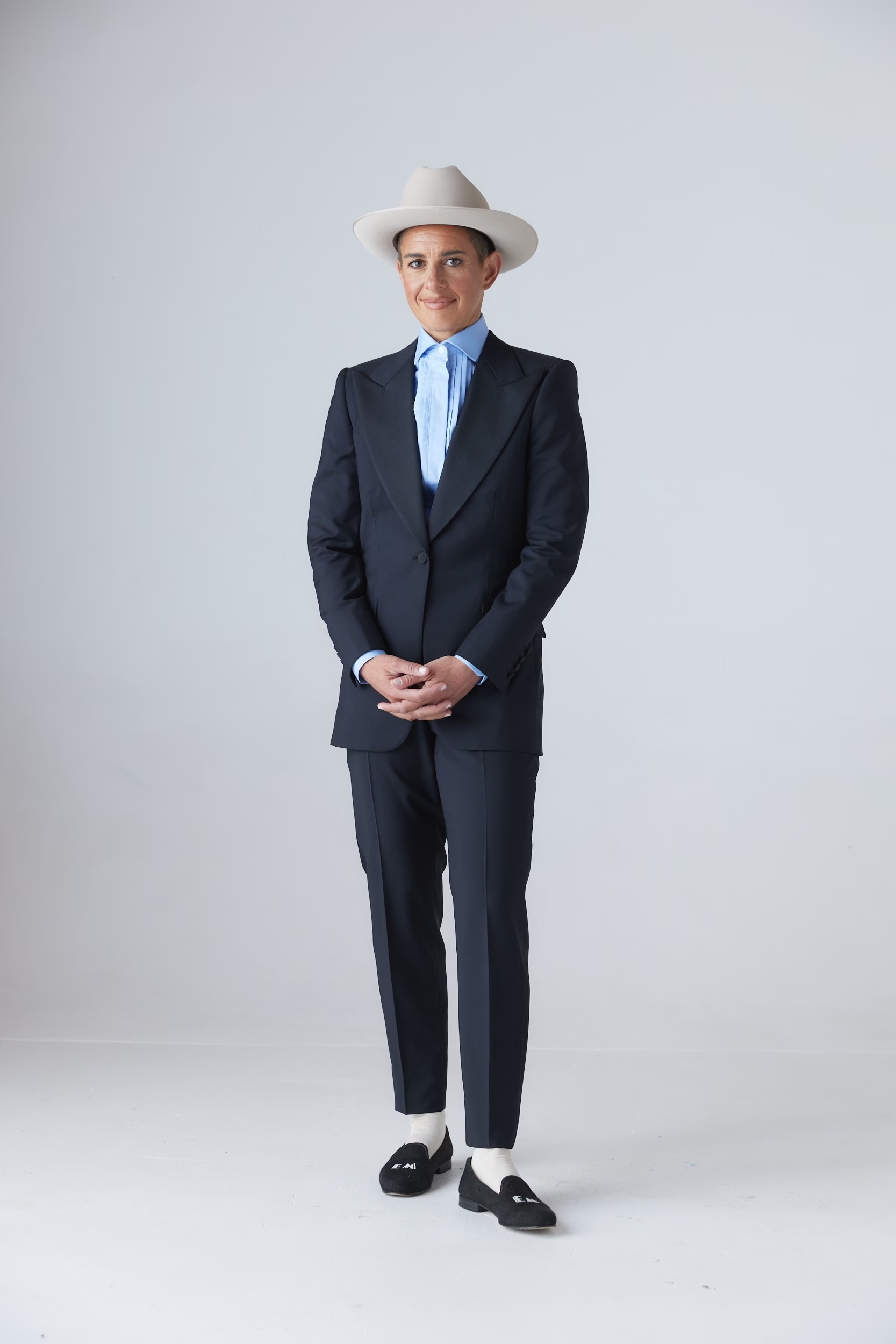
Warson recommends that clients select a pant style similar to what they are already comfortable with. “Sometimes people can come in for their fitting and put on a style they aren’t used to wearing and then feel very dysphoric, and it morphs from a style choice into an identity crisis.”
Finding the right suit should be a joyful experience, and a celebration of individuality. Unfortunately, the stress of weddings, societal pressure, and preconceived notions can all conspire to make it a stressful experience.
Both Meyer and Watson are used to clients telling them they plan to lose considerable weight before their wedding. Though they respect their client’s thoughts, both wish the soonlyweds knew that losing weight is not a requirement for feeling amazing on your wedding day. The added pressure often robs people of the joy of the journey.
“Being as comfortable in your own skin as possible really makes the process happier for everybody,” she says. “I realize that’s a tall order because all of us have things we don’t like, but radical acceptance is so important. This is a celebration of love between two partners, and your partner loves you already unconditionally. So, take a leap of faith and really step into that, and realize you’re marrying this person who loves you as you are.
Timeline to Your Custom Suit
Timelines vary depending on many factors: the designer’s preference and process, how many fitting are required, the complexity of the design, and whether or not your designer creates a muslin test garment. Though many companies, like Duchess Clothier, ask for 12 to 15 weeks of lead time, others (including Emily Meyer) prefer at least nine months for a wedding suit for a first-time client.
4-6 Months* Before the Wedding: Start Shopping
- Begin researching tailors and booking consultations.
- Decide on fabrics, colors, and style.
- Consider any special customizations (monograms, linings, lapel styles).
*Though 4-6 months is average, some tailors may request a longer lead time.
3-4 Months Before: First Consultation & Measurements
- Meet with the tailor to discuss design and fit preferences.
- Get professional measured.
- Choose fabric and details (buttons, pockets, stitching).
6-8 Weeks Before: First Fitting
- The tailor will create a basted fitting (temporary version of your suit) or have a partially completed suit ready.
- Adjustments are noted for a perfect fit.
4-6 Weeks Before: Second Fitting
- The suit is more refined but may still need minor tweaks.
- Ensure comfort, sleeve length, pant break, and overall fit.
2-3 Weeks Before: Final Fitting
- The final suit is almost complete.
- Minor last-minute adjustments can be made.
1-2 Weeks Before: Suit Pickup
- Pick up the final suit and try it on one last time.
- Ensure it fits perfectly and is pressed/ready for the big day.
This article originally appeared in our V10 print issue. To read more, purchase your copy here.
Real wedding photos captured by River and Root Photography