

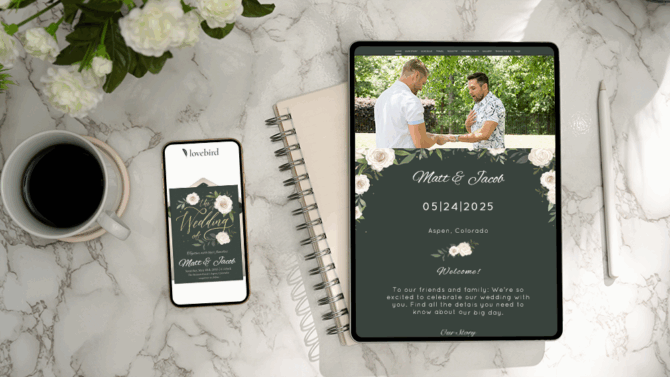
Once considered impersonal or informal, digital wedding invitations are now a stylish, sustainable, and entirely acceptable option for couples planning modern weddings.
This post contains affiliate links. Love Inc. Magazine may earn a small commission if you shop through them, at no cost to you. We only feature products we actually love.
From beautifully animated e-vites to streamlined RSVP tracking, going digital has never looked so good or been so widely embraced. But with new formats come new etiquette rules. Here’s what couples (and guests) should keep in mind when sending and receiving digital wedding invitations in today’s digital-first world.
For the full lay of the land on wedding paper — from save-the-dates through thank-you notes — check out our complete wedding stationery guide.
Why Digital Wedding Invitations?
The shift toward digital invitations isn’t just about convenience although that’s certainly a big perk. Many couples cite sustainability and cost savings as driving factors. Traditional stationery suites, while gorgeous, can be expensive and waste-heavy. Digital invites eliminate paper waste, postage costs, and the logistical back-and-forth of mail delays or lost envelopes.
Technology also allows for elevated designs that rival printed versions. Platforms like Lovebird, Paperless Post, Greenvelope, and Bliss & Bone offer luxurious aesthetics, animation, and personalized touches that feel anything but basic.
And here’s a plot twist: digital invites are no longer just for casual or eco-minded couples. At recent industry conferences, luxury wedding planners have reported a surge of high-end clients choosing beautifully designed digital suites, often paired with showstopping day-of printed details like menus and ceremony programs. Add QR codes, subtle animation, and live RSVP tracking, and the category has officially graduated from “budget option” to “legitimate creative choice.”
Modern Digital Wedding Invitation Etiquette
1. Know When Digital Invitations Work Best
Digital invitations are widely accepted for most wedding-related events — especially save-the-dates, engagement parties, showers, welcome parties, and even some ceremonies and receptions. That said, for very formal or black-tie weddings, some guests (particularly older generations) may still expect a physical invitation. In these cases, a hybrid model — mailing printed invitations to select guests while sending digital versions to others — is a thoughtful compromise.
2. Make It Personal
Just because it’s digital doesn’t mean it has to be impersonal. Include warm, personalized wording, and consider using engagement photos, a custom monogram, or even a short video message. The design should reflect the tone of your event, just like a printed suite would. And many e-vite sites allow uploading your own designs, so if budget allows, you can still work with a stationer to create a custom design for your invite, which can then be used throughout other day-of details.
3. Email Etiquette, Elevated
Treat your digital invitation with the same care you would a printed one. Send from a recognizable email address, use a clear subject line (e.g., “Emma & Jordan’s Wedding Invitation”), and double-check for typos or formatting glitches. Avoid attaching large files that may get flagged as spam — instead, embed a link to a beautiful web-based invite or include the details directly in the email.
4. Be Mindful of Timing
Send save-the-dates 6–8 months in advance (earlier for destination weddings) and invitations around 8–10 weeks before the big day. Guests still need time to request time off, make travel arrangements, and RSVP — a digital format doesn’t mean you can cut corners on the timeline.
5. Track RSVPs Thoughtfully
One of the biggest advantages of e-vites is simplified RSVP tracking. Many platforms offer automatic reminders, guest list organization, and meal selection forms. However, don’t rely on a single email to do the work — follow up as needed, and always have a contingency plan for guests who aren’t tech-savvy.
6. Mind Your Guest List Privacy
If your platform displays a full RSVP list, make sure it’s intentional and appropriate. For larger or more private affairs, disable this feature so guests only see their own details.
7. Don’t Ditch All the Details
Use your e-invite to direct guests to a wedding website that houses additional information: dress code, directions, accommodation options, registry links, and FAQs. Think of the digital invitation as the elegant doorway, the website is the full suite. Not sure where digital fits into your broader paper game plan? Our wedding stationery guide breaks down every piece of the suite: physical, digital, and everything in between.
8. Consider Accessibility
Not everyone is equally comfortable with technology. Older guests or those without regular internet access may prefer a printed alternative. Always ask yourself: “Will everyone I’m inviting be able to access this easily?”
9. Proof Before You Send
This might seem obvious, but one-click delivery can make it easier to skip a second set of eyes. Check (and double-check) all names, dates, times, and links before hitting send. It’s much harder to recover from an error once the invite is live in everyone’s inbox.
Digital Wedding Invitation FAQs
Are digital wedding invitations tacky?
Not anymore. What used to feel informal now feels intentional, especially when paired with a thoughtful design, a real wedding website, and a warm, personal tone. Plenty of couples (including at the luxury end) are choosing digital for style reasons, not just budget ones. Tacky is in the execution, not the format.
Are digital wedding invitations appropriate for a formal or black-tie wedding?
Yes, with the right design. A sophisticated color palette, elegant typography, formal wording, and a custom animated touch can absolutely carry a black-tie vibe. If you’re worried about older guests, a hybrid approach works beautifully: mail printed invitations to a select list and send digital versions to everyone else.
When should you send digital wedding invitations?
Save-the-dates go out 6–8 months ahead (8–12 months for a destination wedding). Digital invitations follow 8–10 weeks before the big day, with an RSVP deadline about 3–4 weeks out. Timing doesn’t shift just because the format did.
Can I send digital invitations to some guests and paper ones to others?
Absolutely. This hybrid approach — sometimes called a “mixed send” — is common and thoughtful, especially when your guest list spans generations or includes people without regular email access. Just make sure every guest receives their invitation at the same time.
What should a digital wedding invitation include?
The essentials: both partners’ names, wedding date and time, venue (or ceremony/reception locations if separate), dress code if applicable, and a clear RSVP link or mechanism. Skip the registry info and any mention of pre- or post-wedding events that aren’t open to all guests — that belongs on your wedding website.
The Bottom Line
Digital wedding invitations have come a long way — they’re now a chic, eco-conscious, and customizable option that fits seamlessly into the way we live today. With a few thoughtful touches and attention to etiquette, they can feel just as meaningful and stylish as their printed counterparts. Whether you’re inviting 20 or 200, it’s not the format that makes the invite feel special, it’s the love, intention, and attention to detail behind it.